Gas Bottle Trolley, Clamp or Cylinder Lifter? How the Options Compare
There's more than one way to get a full gas cylinder from the store to the welder. Here's how the common methods stack up, so you can choose what suits your workshop. We compare types of equipment, not brands.
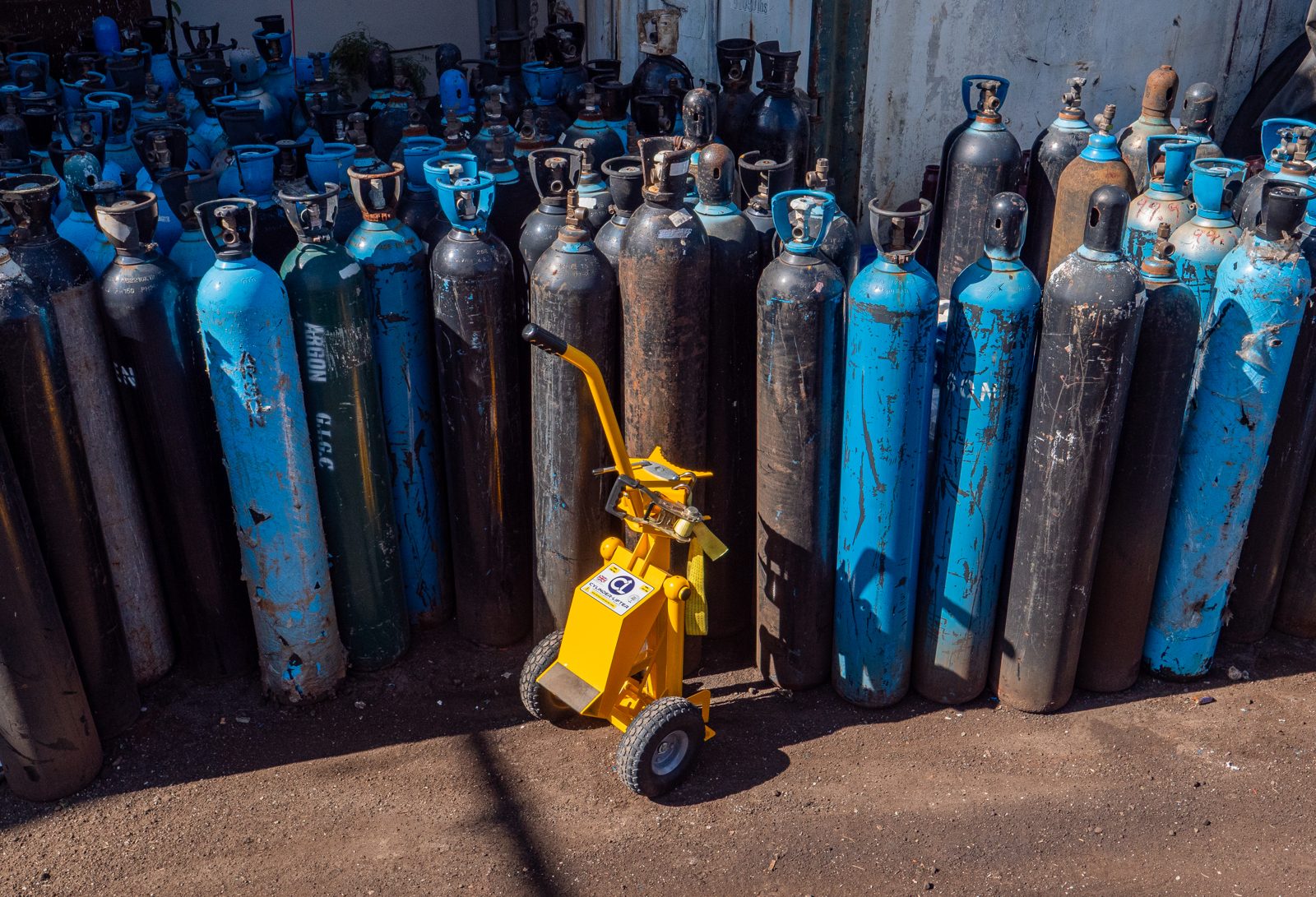
At a glance
| Method | Moves cylinders around the site | Puts them onto a welder or platform | What takes the weight | Power and upkeep |
|---|---|---|---|---|
| Lifting by hand | No, they're carried, rolled or "walked" | Yes, by lifting | Your staff, often two people | None |
| Clamp grabbers | No, they're still carried by hand | Yes, by lifting | Your staff, with a better grip | None |
| Gas bottle trolleys | Yes | No, the final lift is by hand | Your staff, for the final lift | None |
| Winch lifters | Yes, depending on the model | Yes | A hand-cranked winch | None, but every lift takes a number of turns |
| Hydraulic lift trucks | Yes | Yes, and often higher, depending on the model | A hand-pumped hydraulic ram | Hydraulics need regular checks and servicing |
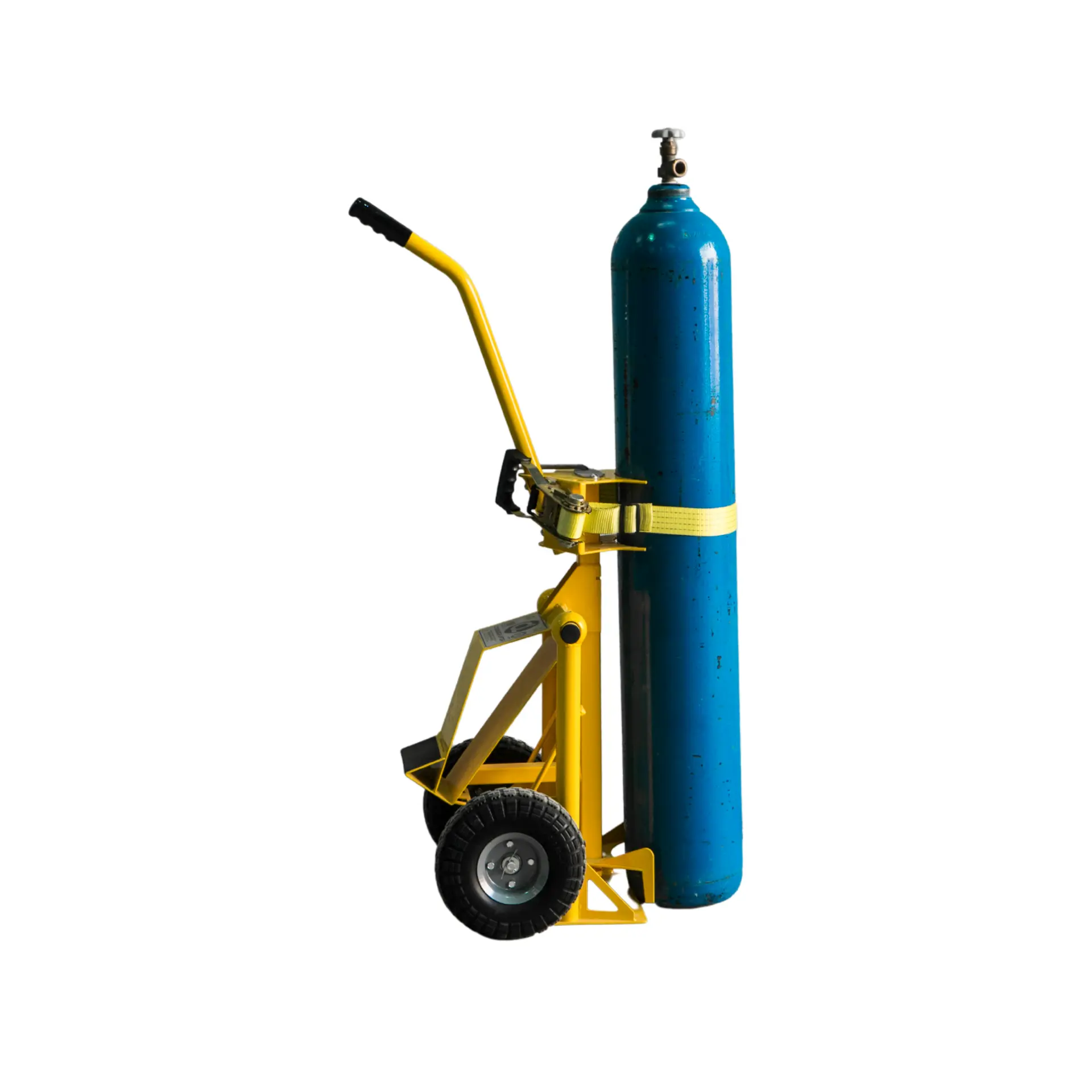 Cylinder Lifter | Yes, on 250 mm puncture-proof wheels | Yes, onto platforms up to 250 mm high | The pivot frame; about 14 kg reaches the handle | None: no motor, battery or hydraulics |
Lifting by hand
It needs no equipment, which is why it's still so common. But a full large cylinder can weigh 80 kg or more and has nothing to grip, so hugging it onto a welder strains the back, shoulders and elbows. If it slips, it can land on someone's feet or damage the valve.
Clamp grabbers
A clamp grabber fits around the cylinder and gives you a handle, so it's far easier to grip and control. It doesn't take any of the weight, though: the person using it still lifts the full load onto the welder. It suits occasional moves of smaller cylinders.
Gas bottle trolleys
A standard trolley is simple, widely available and good at wheeling cylinders across a floor. Its weak spot is the last step: getting the cylinder off the trolley and onto the welder's cylinder carrier still means lifting it by hand.
Winch lifters
A hand-cranked winch raises the cylinder on a mast or cradle, so nobody takes its weight, and some models lift well above floor level. The trade-off is size and time: the mast makes them bigger than a trolley, and each lift takes a number of turns of the handle.
Hydraulic lift trucks
A hand-pumped hydraulic ram lifts the cylinder smoothly, and many models can raise it higher than a welder's cylinder carrier. The hydraulics need regular checks and servicing, though, and raising each cylinder takes several strokes of the pump.
The Cylinder Lifter
A non-powered trolley with a pivot frame. Strap the cylinder in with the 50 mm ratchet strap, use the pivot to raise it, wheel it to the welder and set it down onto the carrier. Only about 14 kg reaches the handle, so one person can do the whole job. It takes cylinders up to 100 kg and about 254 mm in diameter, weighs 26 kg and is CE and UKCA marked.
When the Cylinder Lifter isn't the right tool
It places cylinders onto platforms up to 250 mm high and carries one cylinder at a time. It isn't a hoist or crane, so it won't lift a cylinder onto a vehicle or a raised deck. For those jobs, a winch lifter, a hydraulic lift truck, or a crane or hoist may suit you better.
Changing cylinders at welder height?
The Cylinder Lifter costs £790 + VAT, with UK delivery in 3-5 working days. Got questions first? Read our FAQs.
